
Water Restoration
Emergency response for extraction, drying, and monitoring to get a wet structure back to a stable, dry condition as quickly as possible.
Serving Austin, Texas & surrounding areas
Protect your home and timeline with fast cleanup, professional drying, and careful repairs after leaks, overflows, or storm water. Get a clear scope and documented moisture readings from a local Austin team.
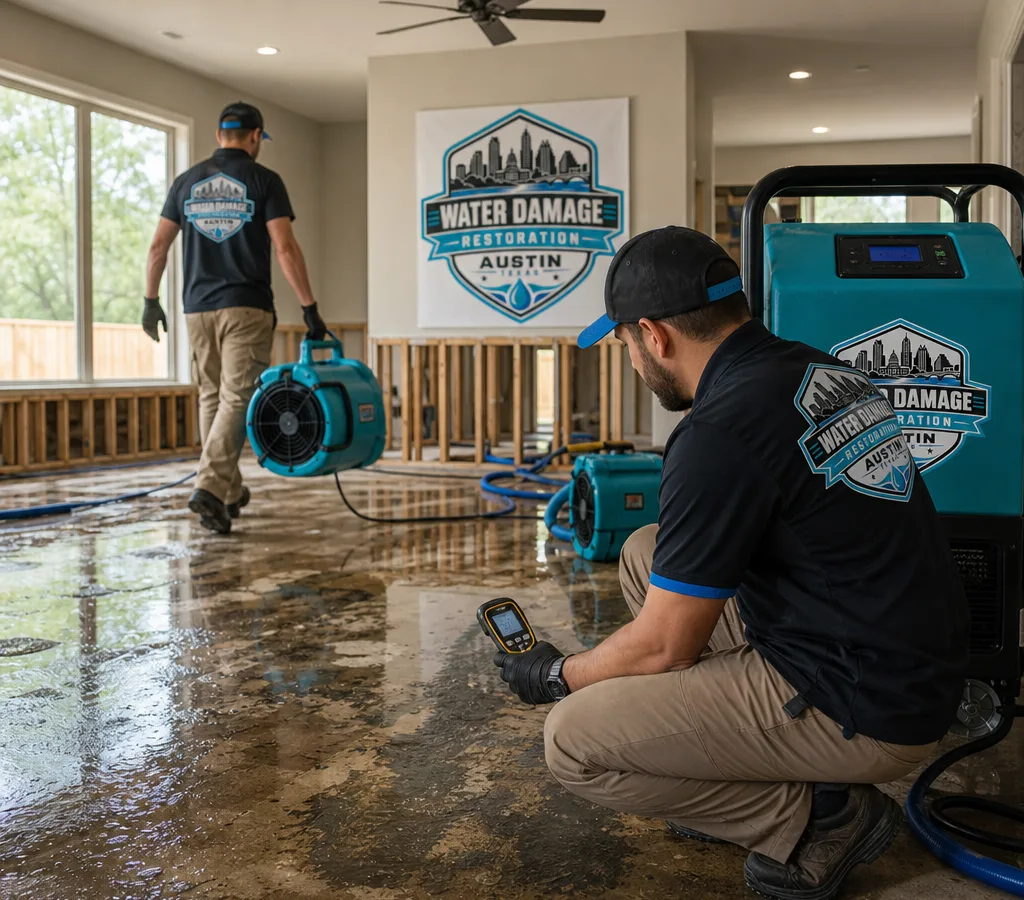
When you are dealing with Austin water damage, speed matters, but so does doing it correctly. Water can move under flooring, behind baseboards, and into drywall cavities where it stays wet long after the surface looks fine.
Water Damage Restoration Austin handles the full water damage restoration Austin process: stop the spread, protect belongings, extract standing water, set drying equipment, and verify dryness with moisture mapping. We document what we find, explain what needs removal versus what can be dried in place, and keep the worksite safe and contained.
Common situations we respond to include supply line breaks, water heater failures, AC drain pan overflows, dishwasher or washing machine leaks, toilet overflows, and wind-driven rain intrusion. If you are not sure how far the water traveled, that is exactly what the inspection is for.
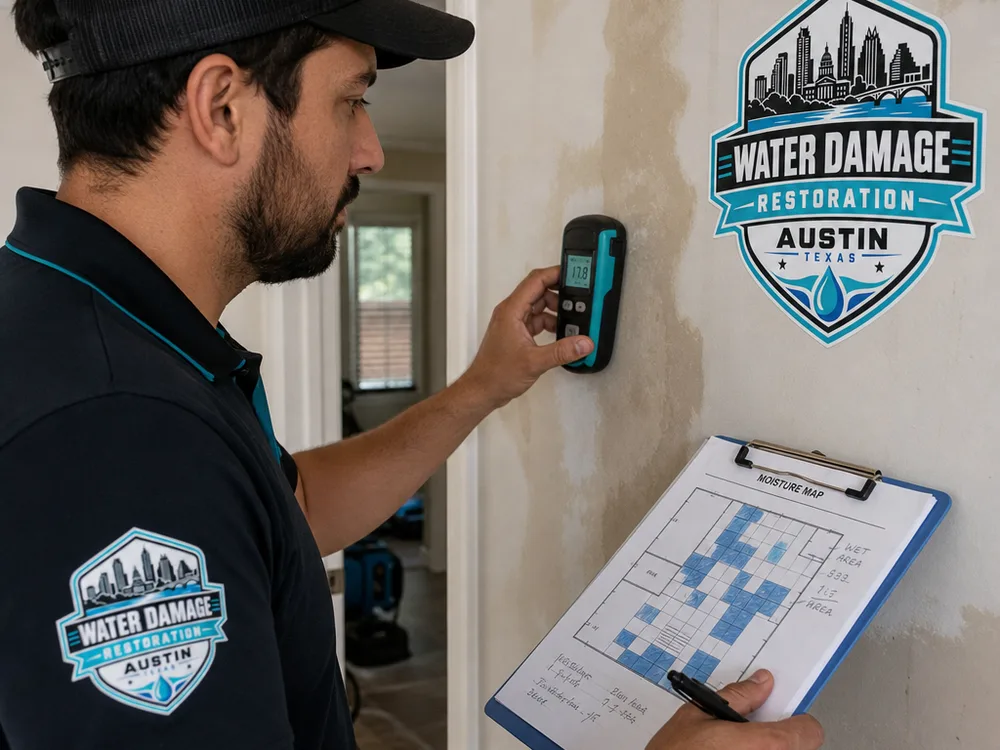
Emergency response for extraction, drying, and monitoring to get a wet structure back to a stable, dry condition as quickly as possible.
Focused mitigation to reduce damage after a leak or flood event, including moisture mapping, drying plans, and controlled demolition when required.
Repairs after the structure is dry, such as drywall replacement, baseboards and trim, flooring repairs, and paint-ready finishes.
Containment, removal, and cleaning when mold is present after a leak or chronic moisture. Includes safe demolition of affected materials and post-remediation cleaning.
Targeted inspection and sampling to confirm what is in the air or on surfaces, with clear results to guide next steps for property owners and tenants.
Cleanup and repair after fire or smoke damage, including debris removal, odor control, and rebuild coordination based on the affected areas.
We track moisture in drywall, framing, subfloors, and affected rooms so drying decisions are based on readings, not appearances.
Equipment placement and containment are set up for your layout, airflow, and affected materials, then adjusted as conditions change.
If wet materials cannot be dried in place, we remove only what is necessary to prevent trapped moisture and secondary damage.
We provide clear notes and photos of what was affected and what was done, useful for landlords, homeowners, and restoration decision-making.
We protect floors and pathways, keep equipment tidy, and explain what to expect day to day while drying is underway.

Water Damage Restoration Austin is a local Austin, TX team focused on water damage restoration in Austin for homes and small commercial spaces. Our work is practical and methodical: identify the water source, prevent additional spread, remove what cannot be saved, and dry the structure to verified targets.
You will get straight answers about what is happening inside the building materials and what it takes to return the space to normal. We are set up to respond to urgent situations, but we also help with slower leaks where moisture has been building over time.
If you are comparing options, ask how the contractor verifies dryness. A professional water damage restoration Austin, TX job should include moisture readings and a documented plan, not just fans running for a few days.
Water damage restoration in Austin typically ranges from about $1,200 to $6,500 for many residential projects. Small, contained incidents (like a localized supply line leak) often fall around $1,200 to $2,500, while multi-room drying with material removal and rebuild prep commonly lands around $3,000 to $6,500+.
Final pricing depends on the water category, how long materials stayed wet, how far moisture traveled (subfloors, wall cavities), required containment, equipment days, and what finishes need removal. The exact cost is confirmed after an on-site inspection and moisture mapping.
We locate affected areas with meters and thermal imaging where appropriate, then outline what can be dried and what needs removal.
We remove standing water, protect walkways and contents when possible, and set up containment if needed to control dust and humidity.
Air movers and dehumidifiers are placed for airflow and pressure balance. We adjust equipment based on readings until targets are met.
Once dry, we document final readings and walk you through repair recommendations so you can restore finishes with confidence.
If water is still moving, staining is spreading, or floors feel soft, the next step is a same-day inspection and moisture map so you know what is wet and what is not.
Call for Emergency HelpWe provide water damage restoration across Austin, with drying plans that match the building type and the way water typically travels in that area's homes.
South Congress (SoCo): A mix of older bungalows and remodels where small plumbing leaks can run under newer flooring layers.
Mueller: Many newer builds with modern materials, but water can still migrate through open-plan layouts and into adjacent rooms.
East Austin: Older housing stock and pier-and-beam foundations in some areas can make subfloor moisture and crawlspace humidity important inspection points.
Tarrytown: Older homes with multiple additions where water can cross transitions between original framing and newer construction.
Circle C Ranch: Larger homes where a second-floor overflow or AC drain issue can affect ceilings, walls, and multiple rooms.
“We had water under our flooring and didn't realize how far it spread. The moisture map and the updates during drying made everything feel a lot less chaotic.”
“They explained what had to be removed versus what could be dried in place, and they kept the equipment set up neat and safe while we were still living in the house.”
“Fast response, clear documentation, and the space was actually dry when they said it was. That gave us confidence to move forward with repairs.”
We prioritize active leaks, standing water, and situations where floors or drywall are still absorbing moisture, and we can often start the same day. Early extraction and properly sized dehumidification are the best way to limit how far water travels in wall cavities and under flooring.
Yes, we can manage mitigation (extraction, drying, monitoring) and then complete repair work once the structure is dry. Keeping the handoff tight helps avoid rebuild over wet materials, which is a common cause of odor and finish problems later.
Stop the water source if it is safe, shut off power to wet areas if outlets or cords are involved, and move small valuables out of the affected rooms. Avoid running household fans into wall openings or vents because it can push moisture deeper into cavities.
Sometimes, yes, but only when readings show materials cannot be dried in place or when trapped moisture is likely behind finishes. The goal is to remove the minimum necessary to dry the structure correctly and prevent secondary issues.
We use moisture meters to track affected materials over time and compare readings to known dry areas in the home. A proper closeout includes final moisture documentation so you are not relying on smell or surface appearance.
Yes, we regularly help owner-occupied homes, rentals, and small commercial spaces in Austin. We can coordinate access, document conditions, and communicate a clear scope so decisions can be made quickly.
Tell us what happened and what rooms are affected. We will schedule an inspection, map the moisture, and give you a written plan for cleanup, drying, and next steps.