
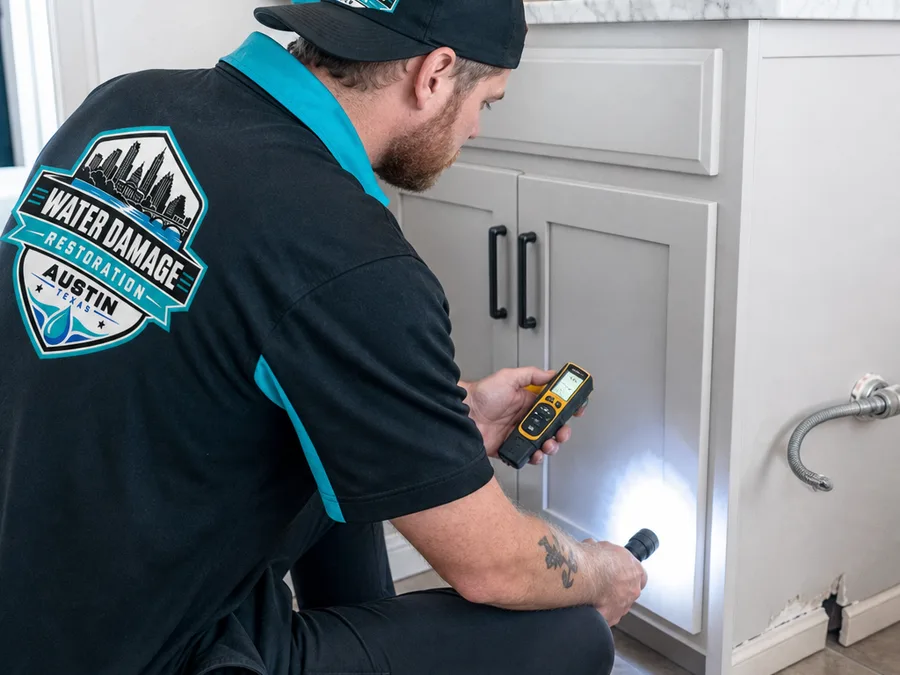
Moisture inspection and mapping
We check affected rooms and adjacent areas with moisture meters and thermal imaging where it helps, then document readings so drying decisions are based on conditions, not assumptions.
Serving Austin, Texas & surrounding areas
When water gets into building materials, the clock matters. Get a clear plan for drying, cleanup, and documentation so you can protect the structure and move toward repairs with fewer surprises.
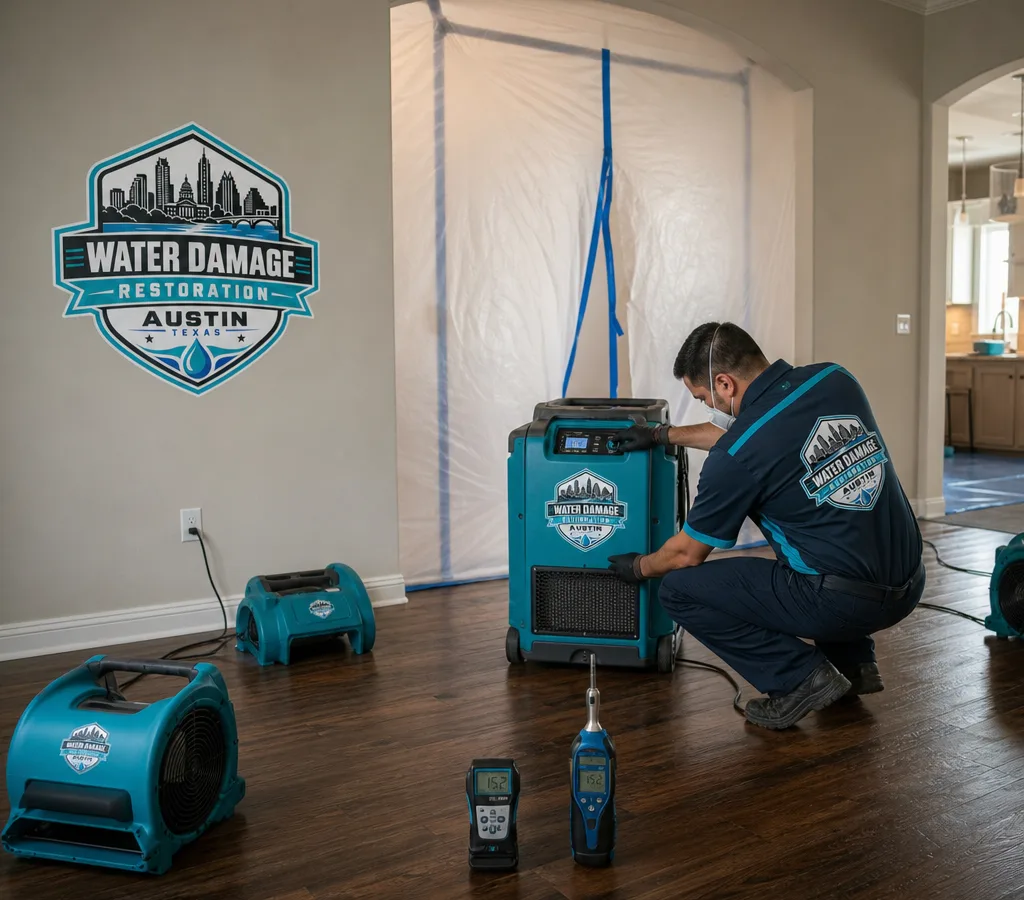
Water restoration Austin work is about stopping ongoing damage, drying materials correctly, and preventing secondary issues like odor and microbial growth. If the water is still active, the first priority is safety and source control. After that, the work becomes a building-science problem: how much moisture is in the drywall, baseboards, framing, insulation, and flooring, and what combination of airflow, dehumidification, and controlled temperature will remove it.
In Austin, a lot of homes have slab foundations, engineered wood or laminate floors, and open-plan layouts. Those details affect where water travels and where it hides. A surface that looks dry can still hold moisture underneath, especially around cabinets, toe kicks, and along wall plates. Our team uses moisture mapping and targeted drying so you are not guessing.
Water Damage Restoration Austin handles residential and commercial water damage restoration in Austin, TX. You will get a written scope that matches what we find on site, along with practical guidance on what can be dried in place and what typically needs removal to dry safely.
A complete scope follows the water from initial extraction through verified drying and repair coordination.
We check affected rooms and adjacent areas with moisture meters and thermal imaging where it helps, then document readings so drying decisions are based on conditions, not assumptions.
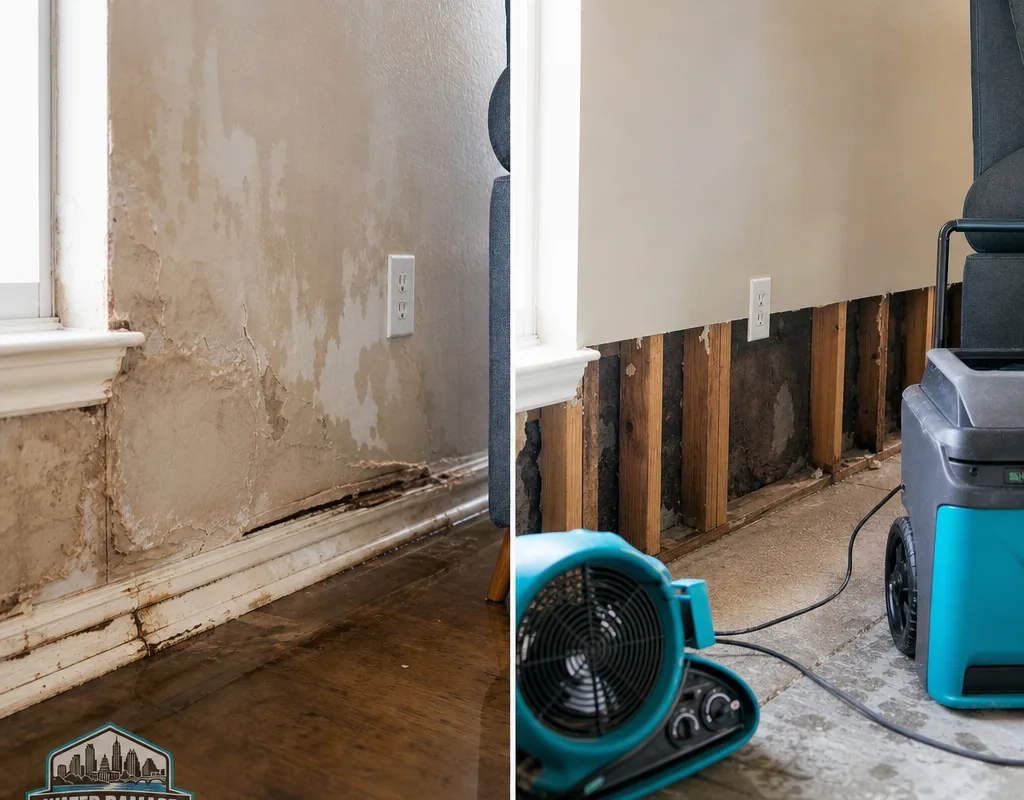
Standing water is removed first. When materials cannot dry effectively, we remove only what is needed—such as wet baseboards, portions of drywall, or saturated insulation—to open the assembly for drying.
Air movers, dehumidifiers, and containment are set based on the category of water and the materials involved. The goal is stable, measurable drying, not just moving air around.
We clean affected surfaces and address odor at the source. When personal items are involved, we separate dry items from impacted items to reduce cross-contamination.
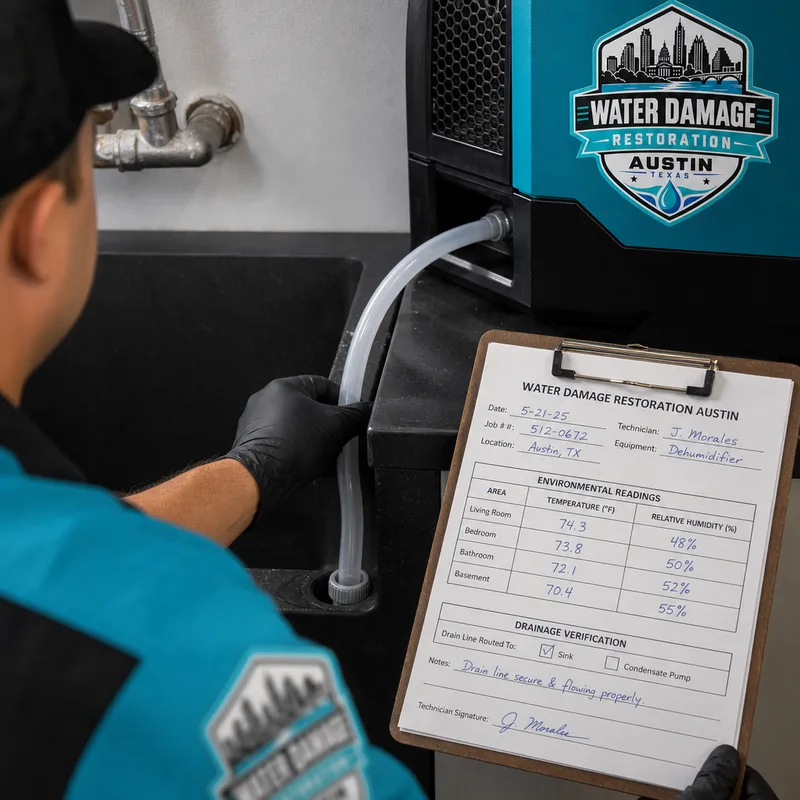
We provide photos, readings, and notes that help explain what happened and what was required. That documentation is often as important as the equipment.
Once drying targets are met, we can help coordinate the next steps so repairs start with a dry, stable structure.
Fast response helps, but speed without the right steps can leave moisture behind. Proper water restoration is complete when materials are dry to an appropriate standard for the assembly, not when the floor feels dry.
We focus on:
Austin conditions can complicate drying. After a loss, indoor humidity can rise quickly when HVAC is off or when doors are opened for ventilation. We size dehumidification to the space and monitor progress so drying stays on track.
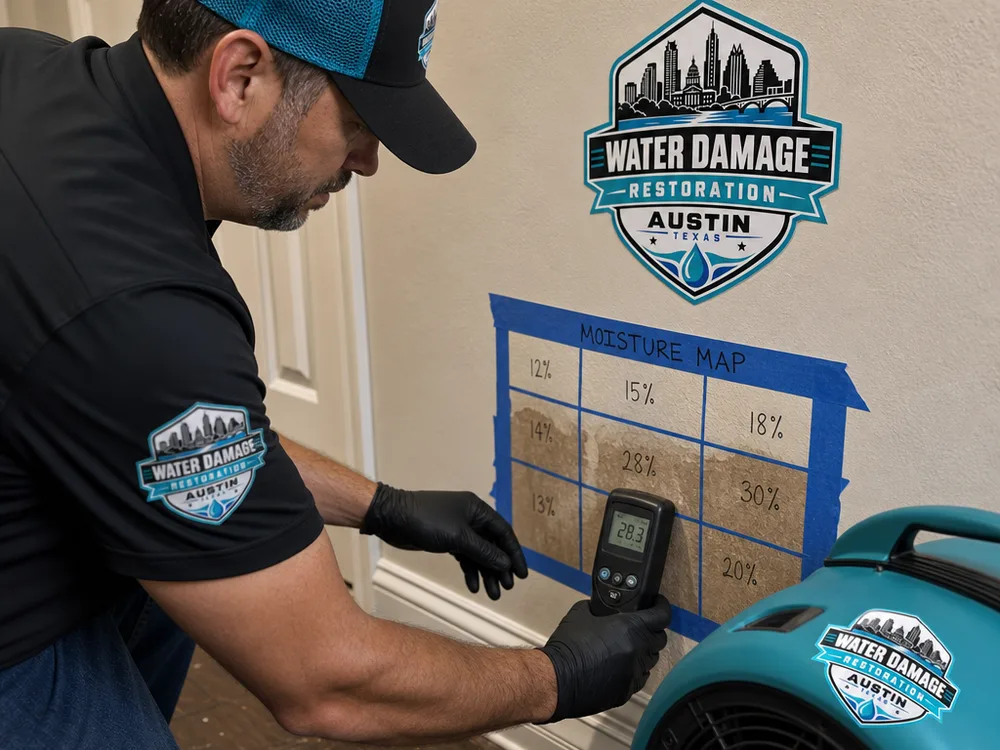
We identify the source, assess affected materials, and confirm any immediate hazards such as electrical exposure, ceiling sag, and slip risks. If needed, we recommend shutting down circuits to impacted areas until it is safe.
We use plastic sheeting, floor protection, and negative air control when appropriate to keep dust and moisture from spreading into clean rooms.
We remove standing water and pull materials that cannot be dried or cleaned to a safe condition, especially in contaminated losses.
We set air movers and dehumidifiers based on room volume, material type, and how water moved through the structure. We also address hidden areas like wall cavities when readings show moisture intrusion.
Drying is not a one-and-done setup. We re-check moisture readings and adjust equipment placement as conditions change, aiming for a stable dry standard before we recommend closing walls.
When drying goals are met, we document final readings and outline repair needs. If you are also dealing with active leak issues, emergency water damage restoration can start with mitigation while the source is being addressed.
Water restoration in Austin typically ranges from about $900 to $6,500+, depending on how far the water traveled and what materials are affected. A small, clean-water incident limited to one room often falls on the lower end, while multi-room saturation, cabinet removal, or contaminated water pushes costs higher.
Final price is driven by moisture extent, including hidden areas, extraction needs, demolition and disposal, equipment run time, containment, and cleaning requirements. The exact cost is confirmed after an on-site inspection and moisture mapping so the scope matches the conditions in your property.
“A supply line failed under our kitchen sink and water ran into two rooms. They showed up, explained what could be dried versus what had to come out, and kept checking moisture until the readings made sense. The documentation was also helpful when we talked to insurance.”
“The part I appreciated most was the plan. They weren't guessing. They mapped the wet areas, set containment, and adjusted equipment as things dried. The house didn't smell musty afterward, which was my biggest worry.”
In urgent situations, the goal is to start mitigation as soon as access is available because drying time and material damage can escalate quickly. Once on site, the first steps are stopping the water source if it is still active, extracting any standing water, and setting a drying plan based on moisture readings.
Yes, water restoration in Austin can be performed for both residential and commercial properties, and the scope is tailored to how the building is used. Commercial work often needs tighter containment, after-hours coordination, and faster dry-down planning to reduce business interruption.
If it is safe, stop the water at the fixture shutoff or main valve, avoid wet electrical areas, and move small valuables out of the affected space. Do not run ceiling fans in rooms with a sagging wet ceiling, and avoid pulling up flooring until the area is assessed because it can change how drying needs to be set up.
Sometimes drywall can be dried in place if the water is clean and the saturation is limited, but insulation often needs removal because it holds water and restricts airflow. The decision is made using moisture readings, the category of water, and whether the assembly can be opened enough to dry safely.
Yes, documentation is a standard part of professional restoration work because it supports the scope and the drying timeline. We record moisture readings, take photos, and provide notes that explain what was impacted, what was removed, and what equipment was required.
Most controlled drying takes several days, but the timeline depends on what got wet and how much water was involved. Dense materials, water under flooring, and saturated wall cavities typically take longer, and we confirm progress with repeat moisture checks rather than relying on appearance.
Yes. Austin restoration needs can vary by building style and access, whether you are in a condo with shared walls, a slab-on-grade home, or a property with multiple stories where water can travel between floors. The fastest way to confirm coverage and response timing is to share your address and a brief description of what happened.
Tell us what happened and what areas are affected. We will outline the next steps, inspect for hidden moisture, and provide a written scope that supports drying, cleanup, and a smooth handoff to repairs.